
It is 96 degrees outside, the AC is running, and the house keeps getting warmer. Before you pay for a service call, a few simple checks can sometimes solve the problem, or at least tell you what to say when you call a contractor. Just as important is knowing when to stop checking and get help.
Everything below is safe for a homeowner: no tools inside the equipment, no opening electrical panels on the unit, and no refrigerant. San Antonio Residential HVAC is a free quote service: we connect San Antonio-area homeowners with independent, TDLR-licensed local HVAC contractors for free, no-obligation quotes. The contractor you choose diagnoses, quotes, pulls the permit and does the work directly with you.
Safety first. If you smell something burning or electrical, turn the system off at the thermostat and at the breaker and leave it off. If a carbon monoxide alarm sounds, leave the house and call 911.
1. Check the thermostat
It sounds obvious, but thermostat settings cause a lot of "no cooling" calls.
- Make sure it is set to Cool and the set temperature is a few degrees below the room temperature.
- Check that the fan is on Auto, not On. With the fan set to On, the blower keeps running and blowing room-temperature air when the compressor cycles off.
- If the screen is blank or dim, replace the batteries (if it has them).
- Check that a schedule, vacation mode or a smart-thermostat program (including utility demand-response events on summer afternoons) is not holding the temperature up.
2. Check the air filter
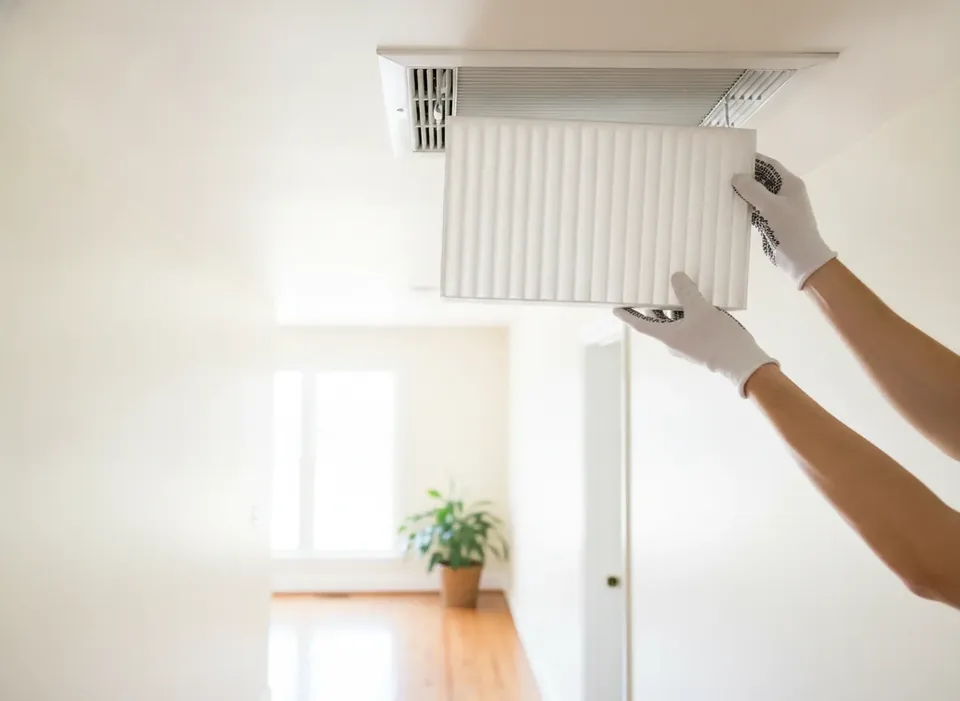
A clogged filter chokes airflow, which can make the system blow weakly, run constantly and even freeze the indoor coil. ENERGY STAR recommends you inspect your filter every month and says a dirty filter "can increase energy costs and damage your equipment, leading to early failure." In a city that sees about 122 days a year at 90 °F or more, monthly checks in summer are worth the habit.
If the filter is gray and caked, replace it with the same size, airflow arrow pointing toward the unit. If the system has been running with a very dirty filter and you see ice on the indoor unit or refrigerant lines, see step 6 before restarting.
3. Check the breaker and the outdoor disconnect
Central AC systems usually have two breakers in the main panel: one for the indoor air handler or furnace and one for the outdoor unit. Look for a breaker that has tripped to the middle or off position.
- You can switch a tripped breaker fully off and then back on once.
- If it trips again, leave it off. A breaker that keeps tripping is protecting you from an electrical fault, and that is a job for a contractor.
- Do not open the outdoor unit's electrical panel. Components such as capacitors can hold a charge even with the power off.
4. Check the condensate drain
Your AC removes a lot of water from humid summer air. ENERGY STAR's maintenance checklist says to check the condensate drain because "a plugged drain can cause water damage in the house." Many systems also have a safety switch that shuts the AC off when the drain backs up, so a clog can look exactly like a dead air conditioner.
- Find where the drain line ends outside and see whether it drips while the system runs.
- If the unit is in a closet or garage and you can see the drain pan, look for standing water.
- Water on the floor, a wet ceiling under an attic unit, or a full pan means stop and call. Our attic AC ducts article explains why attic drains deserve attention.
5. Check the outdoor unit's clearance
The outdoor condenser releases your home's heat into the yard. It needs open air to do it.
- Clear leaves, grass clippings, toys and trash from around the unit; keep shrubs and fences back so air can move freely.
- With the system running, check that the fan on top is spinning. If the unit hums but the fan does not turn, turn the system off and call; running it that way can damage the compressor.
- Do not pry at the fins or stick anything through the grille.
6. Give it time, but watch for warning signs
On a 100-degree afternoon, even a healthy system may run almost nonstop and fall behind a few degrees. If the house is cooling slowly but steadily and the air from the vents feels cool, it may simply be working hard. Stop and call a contractor if you notice any of these:
- Ice on the refrigerant lines or indoor coil. Turn cooling off and set the fan to On so it can thaw; then call.
- The outdoor unit is silent, hums without starting, or clicks on and off repeatedly.
- The breaker trips again after one reset.
- A burning, electrical or hot-dust smell that does not clear (shut the system off at the thermostat and breaker).
- Hissing or bubbling sounds, or oily residue on the lines, which can point to a refrigerant leak.
- Water leaking from the ceiling or the air handler.
- Warm air from the vents with everything above checked.
Why refrigerant is never a DIY job
"Low on refrigerant" is not like low oil in a car. A system that is low has a leak. Published cost guides note that an AC should only need a recharge after a leak has been found and fixed; simply adding refrigerant hides the problem until it comes back.
Federal rules also put refrigerant work in professional hands. EPA regulations under Section 608 of the Clean Air Act require technicians who maintain, service or repair equipment that could release refrigerant to be certified, and EPA says online refrigerant sales are subject to the same technician-certification checks as in-person sales. Never add a different refrigerant to an existing system, and do not open refrigerant lines. When a contractor comes out, it is fair to ask whether the technician is EPA 608 certified. This is general information, not legal advice.
What a diagnostic visit costs
If the checks above do not fix it, the next step is a diagnostic visit. Typical published ranges:
| Item | Typical range |
|---|---|
| Service call / diagnostic | $75–$200 (San Antonio guides: about $75–$150) |
| Typical AC repair | $250–$700 (average about $375) |
| Capacitor or contactor replacement | $100–$450 |
| Refrigerant recharge (after a leak is fixed) | $150–$900; leak repair plus recharge $200–$1,500 |
| After-hours / weekend | often 2–3× the normal rate, about $150–$300 per hour |
Before the visit, ask two questions: is the diagnostic fee credited toward the repair if you go ahead, and what is the after-hours rate? Some San Antonio HVAC companies offer after-hours service, usually at a higher rate; if the house is safe and you can wait until normal hours, you may save money. If you cannot wait, our emergency and after-hours AC repair page explains your options. The full price list is in the San Antonio HVAC cost guide.
Prevent the next breakdown
ENERGY STAR recommends a professional pre-season check-up of the cooling system every spring, before the heat arrives. CPS Energy also offers a no-cost High-Performance A/C Tune-up to eligible customers (it needs an outdoor temperature of at least 55 °F, and the customer supplies the filter); check CPS Energy for current availability. Our AC maintenance and tune-up page covers what a good tune-up includes.
If you need a contractor, our guide to comparing HVAC companies in San Antonio explains how to check a TDLR license and what to ask. Homeowners across the area, from the city itself to suburbs like Schertz, can request free quotes and compare no-obligation responses from independent local contractors.