
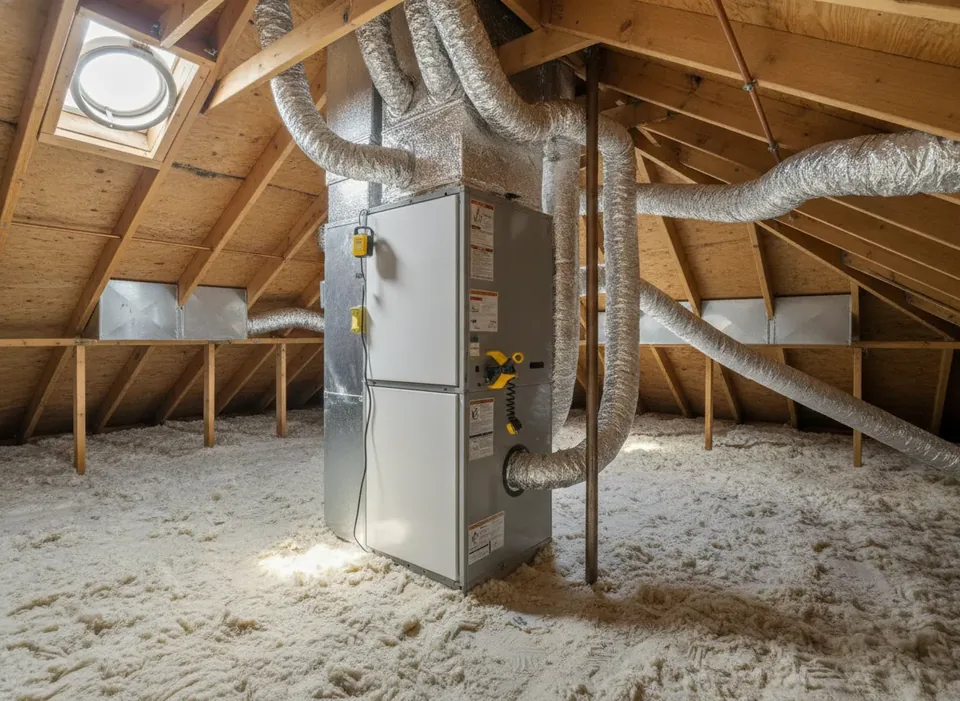
Replacing an air conditioner, furnace, heat pump or air handler is not just an equipment swap. In San Antonio and the suburbs we checked, it needs a city mechanical permit, and in most of them only a licensed, city-registered contractor can get one. The permit also matters for money: CPS Energy will not pay an HVAC rebate inside San Antonio city limits without a permit number. Here is how the rules work in the city and around it, and why the contractor, not you, should pull the permit.
This is general information, not legal advice. Permit rules change; confirm with your city before work begins.
The City of San Antonio rule
San Antonio's Development Services Department (DSD) handles residential permits. Its residential permits page is clear on two points:
- Homeowners "must use licensed trade contractors for new electrical, plumbing and/or HVAC project components."
- "Trade contractors that are licensed by the City or State and registered with the City may obtain trade permits." Mechanical permits are listed as trade-contractor permits and are not on the list of permits a homeowner can pull.
DSD's home remodeling FAQ adds that "to install HVAC equipment, exhaust fans, kitchen hoods, and dryer ducts a permit is required," and that "only State licensed contractors can get electrical, mechanical, and plumbing permits." To register with the city, a mechanical contractor provides photo ID, its state license and a certificate of insurance naming the City of San Antonio as certificate holder, and registrations expire each December 31.
For a homeowner, the takeaway is simple: inside San Antonio, an AC or furnace replacement should come with a mechanical permit pulled by the TDLR-licensed contractor doing the work. If the city's website or your contractor tells you something different for a small repair, ask DSD directly.
Why the permit matters for CPS Energy rebates
CPS Energy's rebate rules state that a "permit number must be provided for all HVAC projects completed within San Antonio city limits." No permit number, no rebate, and with rebates of $90–$310 per cooling ton when funding is available, that can be real money. The application is also due within 30 days of installation, so ask for the permit number up front. Our CPS Energy AC rebate guide lists the other documents you'll need.
Suburbs: what each city says
Outside San Antonio, your own city's building office sets the rules. Here is what the city sources we reviewed say:
| City | What the city says |
|---|---|
| New Braunfels | Registration with the Building Safety Division is required to work as a mechanical contractor in the city, with a certificate of insurance naming the city ($300,000 minimum) and a copy of the TDLR license. |
| Boerne | Contractors must be registered with the City of Boerne to work in the city limits and to submit permit applications; registration has run through the My Government Online portal since July 2025. |
| Universal City | Contractor registration is required for all contractors, mechanical included, and "registration from other cities are not accepted." |
| Live Oak | A permit is required to replace a water heater, interior air handler, AC condenser or HVAC ducts, with a final inspection; see below. |
| Alamo Heights | The city's permits page lists "Mechanical: Heating and A/C installations, replacements, or repairs" among work that needs a permit. |
| Schertz, Cibolo, Converse, Helotes | Each has its own building or development services office. Check with the city for contractor registration and mechanical permit requirements. |
Texas law does stop cities from charging TDLR-licensed AC contractors a registration fee, though cities can still charge permit fees. A contractor that already works in your city will know the process; one that doesn't may not be registered there yet.
Live Oak's 2026 HVAC replacement FAQ
Live Oak published one of the clearest local answers, in its 2026 "Residential Water Heater & HVAC Replacement" FAQ:
- Is a permit required? Yes, to replace the existing water heater, interior air handler, AC condenser or HVAC ducts in your home (citing IRC 2024 R105.1).
- Who can pull it? A licensed mechanical contractor registered with the City of Live Oak, or a homeowner with a homestead exemption completing their own work.
- Inspections: a mechanical final inspection is required, and a passing duct-leakage (Duct Blaster) test is needed if ductwork has been replaced.
- Attics: water heaters may not be installed or replaced in a residential attic.
The homestead option is unusual in this area. Even where it applies, it covers only the owner, and refrigerant work still requires EPA 608 certification, so most homeowners will still have a licensed contractor do the job.
Why the contractor should pull the permit
- It ties the work to a license. In San Antonio only licensed, city-registered contractors can get a mechanical permit, so the permit is proof the company is set up to work there. TDLR also lists "failed to obtain permit" as a violation for licensed contractors.
- It gets the work inspected. An inspector checks the installation against the adopted codes. San Antonio's City Council adopted the 2024 International Mechanical, Residential and Fuel Gas Codes in January 2025.
- It protects your rebate. CPS Energy needs the permit number inside city limits.
- It keeps responsibility with the right party. The permit holder answers for the work. Be cautious if a company asks you to pull the permit yourself, says one isn't needed for a full replacement, or offers a lower price "without a permit."
Ask for the permit number in writing and keep it with your invoice, AHRI certificate and warranty paperwork.
What permits mean for your quote
Permit fees vary by city and job, so ask each contractor whether the permit and inspection are included in the quote. When comparing prices, make sure every quote includes the same things: permit, removal of the old equipment, any duct or drain changes, and the rebate paperwork. Typical installed ranges are on our San Antonio HVAC cost page, and the AC replacement, heat pump and ductwork pages explain what each job involves. To confirm the company itself is licensed, see how to check a Texas HVAC license.
Get quotes from contractors who handle permits
We connect San Antonio-area homeowners with independent, TDLR-licensed local HVAC contractors for free, no-obligation quotes. The contractor you choose diagnoses, quotes, pulls the permit and does the work directly with you. Request your free quote.
Frequently asked questions
Do I need a permit to replace my AC in San Antonio?
Yes. The City of San Antonio's Development Services Department says a permit is required to install HVAC equipment, and mechanical permits are issued only to trade contractors licensed by the city or state and registered with the city. The contractor who installs the system should pull it, and CPS Energy needs the permit number for a rebate.
Can a homeowner pull an HVAC permit in San Antonio?
Not inside San Antonio city limits. The city says homeowners must use licensed trade contractors for HVAC work, and mechanical permits are not on the homeowner permit list. Some suburbs differ: Live Oak lets a homeowner with a homestead exemption pull a mechanical permit for their own work. Check with your city before starting.
Does Live Oak require a permit to replace an air conditioner?
Yes. Live Oak's 2026 FAQ says a permit is required to replace an interior air handler, AC condenser or HVAC ducts. A mechanical final inspection is required, and a passing duct-leakage test is needed if ductwork is replaced. A registered licensed contractor or a homestead owner doing their own work can obtain the permit.